
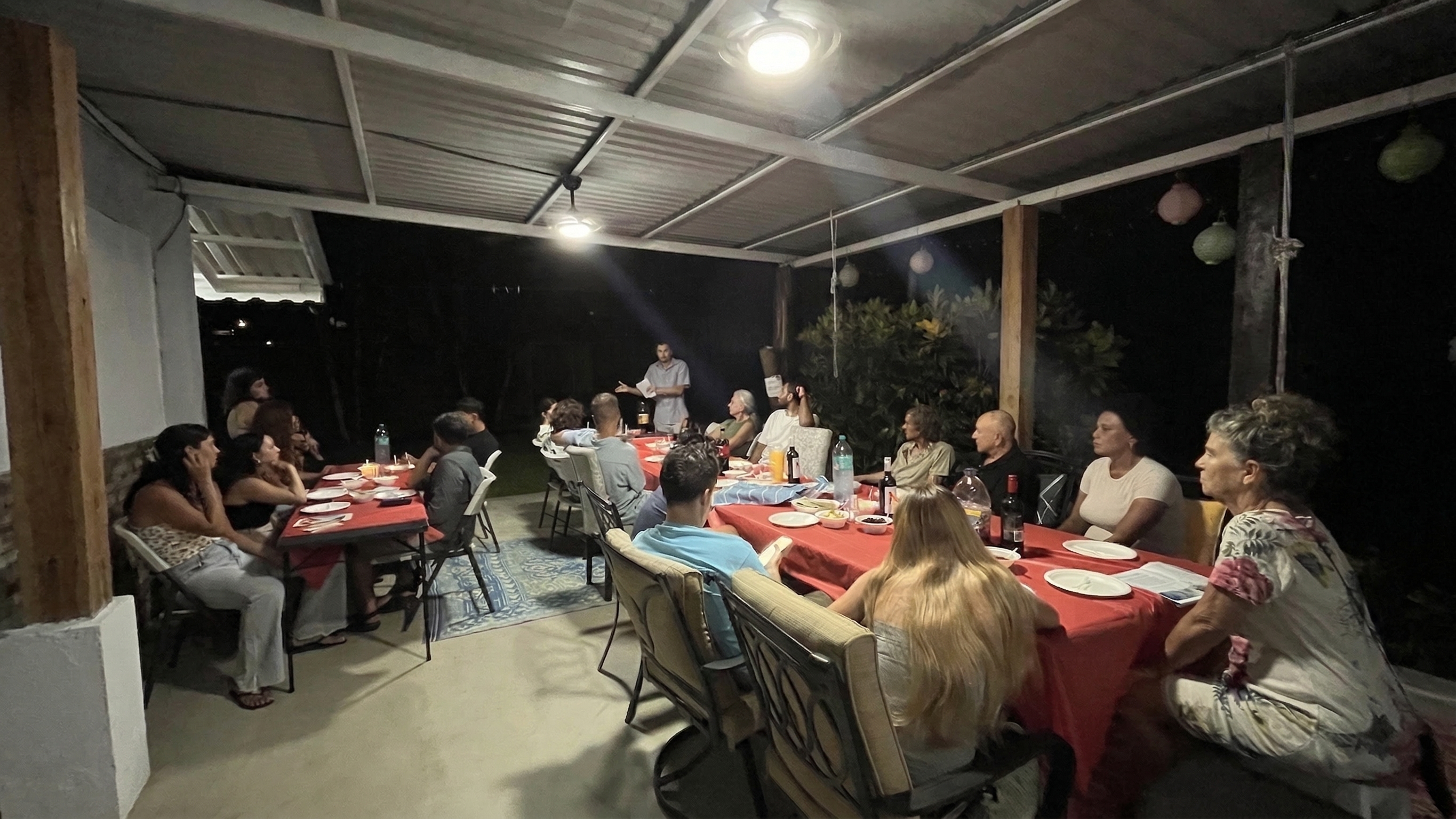
Shabbat is approaching here in Puerto Viejo. The waves of the Caribbean Sea are in the background, more backpackers are arriving after long journeys, and the table at BINA House is starting to fill up. The Torah portion we read this Shabbat is Parashat “Tzav,” and the truth is, at first glance, it’s very hard to find a connection to our lives today. It’s a portion that delves entirely into the minute details of the sacrificial service in the Tabernacle.
To understand what’s going on there, we need to take a moment to put things in order. In the ancient world, the main way to communicate with God was through sacrifices. The Torah divides them into five main types:
- Olah (Burnt Offering): A sacrifice that goes up entirely in smoke on the altar, a symbol of absolute devotion.
- Minchah (Grain Offering): A vegetarian offering (fine flour, oil, and frankincense), usually from simple people who couldn’t afford an animal.
- Chatat and Asham (Sin and Guilt Offerings): Sacrifices brought to atone for specific mistakes or transgressions, a kind of taking responsibility.
- Shlamim (Peace Offering): A sacrifice of “peace.” This is the most social sacrifice—a small part of it is burned on the altar, a part goes to the priests, and the majority is eaten by the person who brought it and their family. A shared feast.
Within the family of “Shlamim” offerings, Parashat Tzav pauses on one special and fascinating sacrifice: the Thanksgiving Sacrifice (Korban Todah).
Not just anyone would bring the Thanksgiving Sacrifice. It was reserved for people who were saved from life-threatening danger. Our sages defined four specific situations that require such a sacrifice: someone who crossed the sea, someone who traveled through the desert, someone who recovered from a severe illness, and someone who was released from prison.
So far, it makes sense. A person is saved, they want to say thank you. But this ceremony was accompanied by an extraordinary law: along with the Thanksgiving Sacrifice, there was an obligation to bring no less than 40 loaves of bread. And all of it—the meat and this enormous amount of bread—had to be finished by the following morning. Not a crumb could be left.
Think about it for a moment. One person (or even one family) cannot finish such a quantity of food in a single evening. So what do you do? This law essentially “forced” the person who was saved to gather people around them. They had to invite extended family, friends, neighbors, and even passersby or the poor from the street to help them finish the feast. And while everyone is sitting and eating, naturally they ask: “What’s the celebration about?” And thus, the person finds themselves telling the story of their rescue in public.
When we sit here at BINA House, meeting travelers who have crossed oceans and trekked through jungles, and also when I think about our own private journey as a family—Keren, Gili, Rotem, and me—who set out on a nomadic life around the world over two years ago, this concept suddenly takes on a profound meaning.
The Torah understands something tremendous about human psychology: it is impossible to truly say thank you alone. When we go through a significant experience, when we are saved from a crisis, when we experience a moment of grace during a long journey—our gratitude is incomplete until we share it with a community. Gathering around the table, sharing experiences, the “togetherness”—these are what make the gratitude real, and also allow us to process what we’ve been through.
So, heading into this Shabbat, we want to pass the “Thanksgiving Sacrifice” on to you. Wherever you are reading this right now—in Israel, somewhere on a trail in South America, or in your living room at home: take a moment to think about who are the people helping you “finish your 40 loaves.”
Shabbat Shalom from Puerto Viejo.