
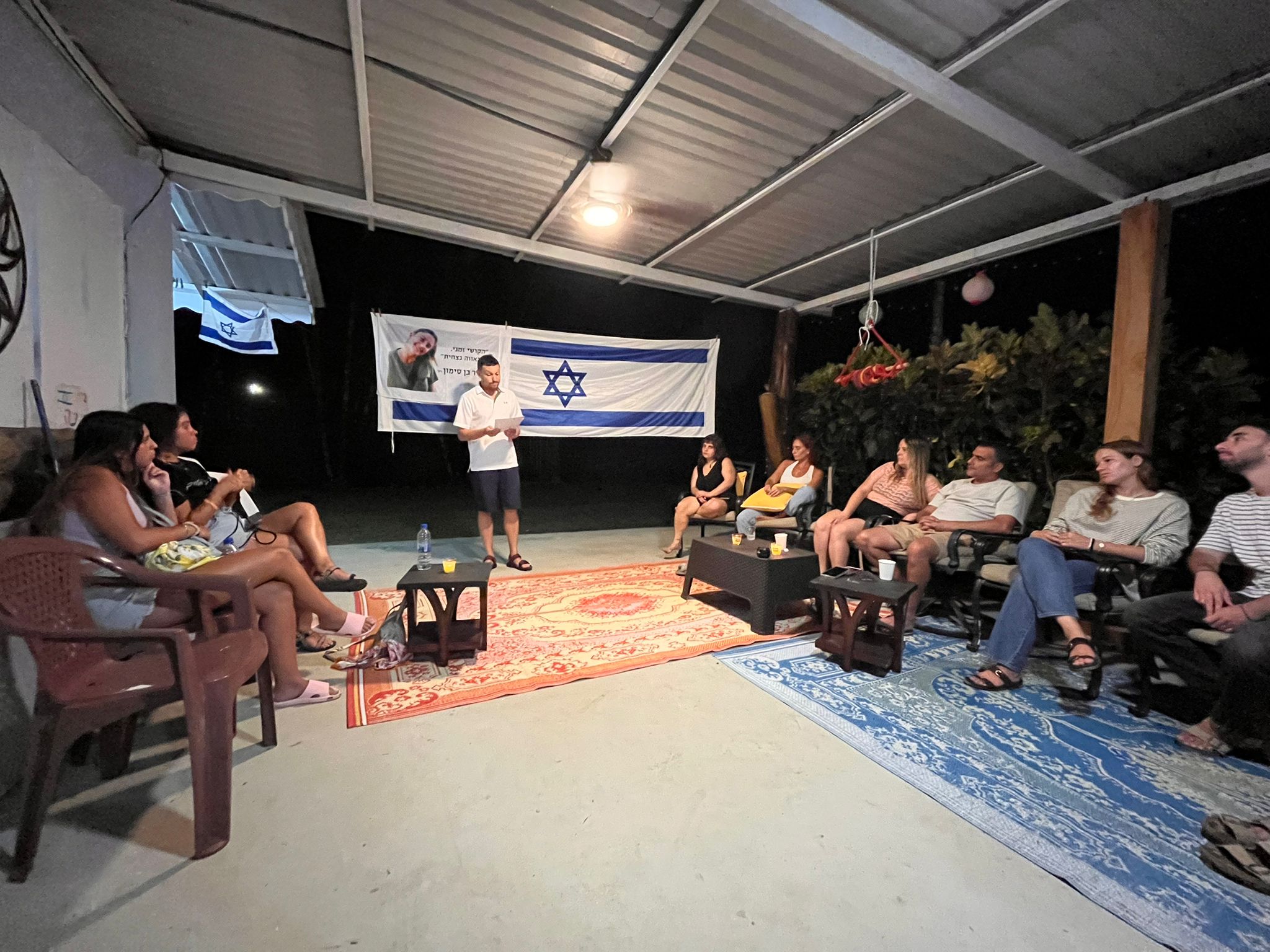
Producing and experiencing a Yom HaZikaron ceremony in the heart of the Costa Rican jungle is an almost surreal experience. On the one hand, we are surrounded by the Caribbean Sea and the pastoral quiet of Puerto Viejo, in a place where one usually seeks space and breath. On the other hand, the vast distance from home doesn’t diminish the pain at all; rather, it sharpens and intensifies it. Last night, the quiet of the jungle met the siren echoing in the streets of Israel, and all of our hearts wandered there—to the families, the friends, and the faces of those who are gone.
In recent years, Yom HaZikaron has carried an unbearable burden. We gathered last night at BINA House simply to not carry this pain alone. An entire community arrived here out of a clear understanding that even when we are so physically far away, we remain one living human tapestry.
After standing together for a minute of silence and reciting the “Yizkor” prayer, we talked about how in our tradition, memory is not just a burden of pain that lands on us, but an active choice. We recalled that the word ‘Yizkor’ (shall remember) is written in the future tense, because memory is the raw material from which we build tomorrow. This time of year feels like an ongoing journey: just two weeks ago we read at the Passover Seder about the Exodus from slavery to freedom, and that ancient journey echoes our modern one—from Holocaust Remembrance Day, through the searing pain of Memorial Day, to the revival and freedom of Independence Day.
The heart of the evening was not composed of official speeches, but of painful, personal stories shared by the attendees, connecting us from the early days of the state to the fresh and bleeding pain of October 7th. Paul shared the story of his relative, Hanoch Holtzker, a Holocaust survivor who fell at just 17 years old during the War of Independence while defending Kibbutz Negba. Afterward, we shed tears hearing about the bravery of Lt. Adar Ben Simon, a company commander at the Zikim training base, who fell on October 7th defending the base at the age of only 20.
The atmosphere in the yard became even more charged and intimate when Uriya bravely shared about his teammate from the Paratroopers Reconnaissance Unit, Lt. Shahar Ben Nun, who fell at the age of 21 during combat in Khan Yunis. Later, we also read the heartbreaking story of Adi Baruch, who insisted on joining the reserves and fell in Sderot, and about her partner Nevo, who kneeled at her grave and proposed with the ring she had always dreamed of.
For me, it was a moment to share private pain and tell the story of Tamar Kedem Siman Tov from Kibbutz Nir Oz. I spoke of the light that Tamar was, of her husband Johnny, and their young children Shahar, Arbel, and Omer, who were all murdered together in their home’s safe room. We remembered the rare optimism that characterized her, the phrase that guided her life—“Creating a shared future”—and the unwritten will they left for us: not to give up in the face of darkness and to continue creating together.
We concluded this moving evening by standing together to sing “Hatikvah.” We stood there, one community on the other side of the world, and our singing echoed into the tropical night. The dissonance between the singing of our national anthem and the sounds of the surrounding jungle was a chilling and touching reminder of the power of our togetherness. The realization that we can gather, cry, remember, and support each other—anywhere on the globe—is our small victory and our promise to the fallen.
May their memory be a blessing.